Hiccough
1.an involuntary spasm of the diaphragm and respiratory organs, with a sudden closure of the glottis and a characteristic gulping sound.
"then she got hiccups"
2.a temporary or minor problem or setback.
"just a little hiccup in our usual wonderful service" a hitch, a snag
un contretemps
Let's share new words, phrasal verbs, idioms or a new web sites to improve our English fluency ....
jeudi 26 juin 2014
lundi 23 juin 2014
As alike as two peas in a pod
Origin: This simile derives, of course, from the fact that two peas from the same pod are virtually indistinguishable.
very similar two of a kind in French: être comme les deux doigts de la main
- We were two peas in a pod – we liked all the same things, and we did everything together.
mardi 17 juin 2014
Word up (1)
thin skinned = over sensitive - qui prend la mouche, à sensibilité à fleur de peau
behind the times = old fashioned - en retard sur son temps
to purr - cat: make vibrating sound - ronronner
to hand [sth] in vtr phrasal = to submit - rendre ou plus soutenu : remettre, remettre sa démission
hand [sth] out, hand out [sth] vtr phrasal = distribute - distribuer
flock (sheep, goats) - troupeau
uncalled-for, uncalled for = unfair, unjust - injustifié
see eye to eye
if two people see eye to eye, they agree with each other (often negative; often + with )
behind the times = old fashioned - en retard sur son temps
to purr - cat: make vibrating sound - ronronner
to hand [sth] in vtr phrasal = to submit - rendre ou plus soutenu : remettre, remettre sa démission
- The students handed in their assignments to the teacher.
hand [sth] out, hand out [sth] vtr phrasal = distribute - distribuer
- Volunteers in Haiti are handing out food and water to earthquake victims.
flock (sheep, goats) - troupeau
uncalled-for, uncalled for = unfair, unjust - injustifié
- Her last comment was uncalled-for so he stormed out of the house.
see eye to eye
if two people see eye to eye, they agree with each other (often negative; often + with )
- He's asked for a transfer because he doesn't see eye to eye with the new manager. (often + on )
- We see eye to eye on most important issues.
- My father and I see eye to eye on most things.
- We don't see eye to eye on a lot of things.
dimanche 8 juin 2014
Downtrodden
without hope because of being treated badly by powerful people, governments, etc.- opprimé
- You've already done your part for the oppressed and downtrodden demons of the world.
- In the fight for change, the most oppressed and downtrodden come to the forefront.
- The downtrodden masses
mardi 3 juin 2014
Hot air

hot air (informal)
if something that someone says is just hot air, it is not sincere and will have no practical results
- Their promises turned out to be just so much hot air. (c'est du vent)
jeudi 29 mai 2014
To cotton on
To cotton on: to get to know or understand something.

Origin
(from http://www.phrases.org.uk/meanings/cotton-on.html)
The phrase 'cotton on to', with the above meaning, appears to be limited in usage to the UK and other countries that were previously part of the British Empire, notably Australia and New Zealand. In the USA, especially in the southern states, 'cotton to' is used, with the slightly modified meaning of 'take a liking to'.
As early as 1648, in a pamphlet titled Mercurius Elencticus, mocking the English parliament, the royalist soldier and poet Sir George Wharton used 'cotton', or as it was spelled then 'cotten', as a verb meaning 'to make friendly advances'. 'Cotten up to' and 'cotten to' were both used to mean 'become friendly with'. Whether this was as a reference to the rather annoying predisposition of moist raw cotton to stick to things or whether it alluded to moving of cotton garments closer together during a romantic advance isn't clear. John Camden Hotten, in his Slang Dictionary, 1869, opted for the former derivation:
Cotton, to like, adhere to, or agree with any person; "to COTTON on to a man," to attach yourself to him, or fancy him, literally, to stick to him as cotton would.
dimanche 25 mai 2014
Green with envy
Green with envy = jaloux comme un pou
In many Western cultures the feelings of envy or jealousy are commonly associated with the color green. A greenish facial tint has long been associated with illness, as suggested by the phrase "green around the gills. (avoir mauvaise mine)" As a person who is very envious is considered by many folks to be unwell, these people have been described as "green (or sick) with envy."
Long before Shakespeare connected green with jealousy, the color was more commonly used to describe illness. The early Greeks interchanged "green" and "pale" to mean sickly. The Greeks thought that when you were ill or jealous, the body produced too much bile, giving the skin a green tint.
samedi 24 mai 2014
mercredi 21 mai 2014
Witty retort
1. Possessing or demonstrating wit in speech or writing; very clever and humorous.
2. Characterized by or having the nature of wit; funny or jocular: a witty saying.
3. Quick to discern and express amusing insights or relationships.
4. Entertainingly and strikingly clever or original in concept, design, or performance: a witty sculpture; witty choreography.
mardi 20 mai 2014
Tapping into the Positive Side of Conflict
by Diane C. Decker
http://qualitytransitions.com/tapping-positive-side-conflict/
(American English)
Tap into the positive side of conflict. Do any of these three examples of brewing conflict sound familiar? 1) You share your experiences and perspectives on an issue with a co-worker, and you are dismissed, with the statement that what you are saying doesn’t make sense or apply. 2) You send an email requesting information to complete a project deadline, and the person never responds. 3) Even when you say you are busy, a co-worker stays in your work area to chat about personal topics or complain about your boss and the company.
Conflict is inevitable. Often the source of the conflict is because of our differences. There are countless ways that people are different, including backgrounds, preferences, opinions, and personalities. Most of us think of conflict in negative ways. Yet, when we use positive communication techniques to address conflicts, we can reap the benefits. The potential benefits include improved relationships, less stress, more creativity, higher productivity, and better results.
vendredi 9 mai 2014
Groundhog Day
A comedy based on an humoristic metaphor that tells how we can be prisoner of the googles through which we look at our surrounding and events in our life, repeating the same errors again and again...
The film, Groundhog Day, is based on a popular US legend concerning the groundhog, an animal that hibernates. The legend is that, when the groundhog comes out of his den for the first time, at the end of winter, if he does not see his shadow there will be an early spring, if he sees his shadow there will be six more weeks of winter. Traditionally, Groundhog Day is 2nd February and a ceremony is held to determine whether or not the groundhog sees his shadow. It is necessary to know that story in order to understand the concept of the film.
Plot ( source: http://en.wikipedia.org/wiki/Groundhog_Day_(film) American English)
Self-centered TV meteorologist Phil Connors (Murray) is reluctantly sent to cover a story about a weather forecasting "rat" (as he calls it). This is his fourth year on the story, and he makes no effort to hide his frustration. On awaking the 'following' day he discovers that it's Groundhog Day again, and again, and again. First he uses this to his advantage, then comes the realisation that he is doomed to spend the rest of eternity in the same place, seeing the same people do the same thing EVERY day.
Genre:Comedy/Fantasy
Director:Harold Ramis
Cast:Bill Murray, Andie MacDowell, Chris Elliott
lundi 5 mai 2014
To prank ;=)
Try to play the "google gravity" prank on someone, it works :=)
www.mrdoob.com/projects/chromeexperiments/google_gravity/

a prank - une farce
A prank is a michievous trick, usually played by children on adults
to play a prank on someone
- jouer des tours à quelqu'un, faire une farce
www.mrdoob.com/projects/chromeexperiments/google_gravity/

a prank - une farce
A prank is a michievous trick, usually played by children on adults
to play a prank on someone
- jouer des tours à quelqu'un, faire une farce
jeudi 1 mai 2014
It takes two to tangle
a variation: "It takes two to tango" - il faut être deux pour....
is a standard expression that is typically used in cases of adultery or accusations of adultery, where one party accuses the other of seduction. It really means that both parties are equally responsible for their actions.
Derivative meaning:
It means also that if you want to reach an agreement between two parties, both sides need to be willing to do so.
Each has to be open for a compromise, 'give and take' a bit, otherwise you end up stale-mate (dans une impasse), without a proper outcome.
The tango image is a good one, no matter how good one partner is, if the other is a klutz (slang: empoté), it won't be much of a tango.
A 1952 song popularized the phrase “it takes two to tango”; and it was quickly applied to everything that required two parties, from romance to fighting.
“It takes two to tangle” will seem the normal phrase to some people, a clever variation to a few, and an embarrassing mistake to many people you might want to impress...
vendredi 18 avril 2014
The Public Library. A Photographic Essay
The Public Library
A Photographic Essay
Dawson, Robert
For nearly twenty years, Robert Dawson photographed public libraries across the United States. From this documentary work, he issued a book, The Public Library: A Photographic Essay (Princeton Architectural Press) who just got out in time for National Library Week, held from April 13 to 19 by the American Library Association.
From Princeton Architectural Press:
Many of us have vivid recollections of childhood visits to a public library: the unmistakable musty scent, the excitement of checking out a stack of newly discovered books. Today, the more than 17,000 libraries in America also function as de facto community centers offering free access to the internet, job-hunting assistance, or a warm place to take shelter. And yet, across the country, cities large and small are closing public libraries or curtailing their hours of operation. Over the last eighteen years, photographer Robert Dawson has crisscrossed the country documenting hundreds of these endangered institutions. The Public Library presents a wide selection of Dawson's photographs, from the majestic reading room at the New York Public Library to Allensworth, California's one-room Tulare County Free Library built by former slaves. Accompanying Dawson's revealing photographs are essays, letters, and poetry by some of America's most celebrated writers. A foreword by Bill Moyers and an afterword by Ann Patchett bookend this important survey of a treasured American institution.
https://issuu.com/papress/docs/public_library/22?e=1189773/6710750
The Public Library
A Photographic Essay
Dawson, Robert
A Photographic Essay
Dawson, Robert
ISBN 9781616892173
Publication date 03/15/2014
8 x 9 inches (20.3 x 22.9 cm), Hardcover
192 pages, 100 color illustrations, 75 b/w illustrations
Rights: World;
Publication date 03/15/2014
8 x 9 inches (20.3 x 22.9 cm), Hardcover
192 pages, 100 color illustrations, 75 b/w illustrations
Rights: World;
dimanche 13 avril 2014
Living with autism with Professor Uta Frith
A documentary worth seeing!
A very moving documentary narrated by a wonderful, fascinating and passionate woman, Professor Uta Frith, a developmental psychologist who has dedicated the rest of her career trying to unravel the mystery of the autistic mind.
Uta Frith ends the documentary by this astonishing revelation:
"I’ve often imagine myself being a bit of autistic. I’m certainly obsessively focused on my work, I’m very analytical and detached and I certainly have said things that have hurt people without realizing it... I’m generally baffled by the complexity of social relationships"
To all of us who have ever hurt someone without wanting it, don't miss the end of the documentary!
When pioneering developmental psychologist Professor Uta Frith started her training back in the 1960s, she met a group of beautiful, bright-eyed young children who seemed completely detached from the rest of the world.
In this film, Uta shows how people with autism perceive the world and interact with their surroundings, and how, for them, another kind of reality exists. She meets people with autism who have extraordinary talents, and explains why they often fail to understand jokes. She also explores whether many of us could be just a little bit autistic.
These fascinating people show us that another kind of reality exists and it’s full of immense challenges and mysteries but also joy. By understanding their world, we can learn more about our world.
Autism takes on many forms and exists on a wide spectrum from mild to severe. It was and still is characterized by a difficulty these people have to communicating and interacting with others and by their tendency to repeat activities over and over again. For them, it’s challenging to make effort with people, to be engaged with people.
Most of us instinctively know that other people have their separate believes, wishes and intentions of their own and it turns out that it is the key to understanding why other people are doing what they are doing. It’s our extra-social sense. What psychologist have learned over the last 50 years, is that not having that kind of social navigation system is what set autistic apart from the rest of us.
The experiment of the triangles story shows us how interpretation are crucial in social interactions.
The case of Sarah shows us how complex autism can be. She is a very clever woman who consciously studies and imitates the way people respond to each other in social situations and that very faculty enables her to effectively mask her autism when she is in public.
Sarah and Key, also autistic, found each other on the Internet. They get on really well , just the two of them. They are committed to total honesty in their constant reflection and analysis;
They say: "You are my required amount of social contact. I’m your 5 ml tea spoon of social contact a day. I don’t miss people. We are like peas in a pod"
Many people with autism have talent that appears to be at odds with the rest of their abilities. Autistic people have a different approach, cutting straight to the chase. Normal children will copy each action, even silly action because they want to do everything the adult does, they are not just learning about how this object behaves but they are also learning how to be social. Autistic people don’t want to copy the extra unnecessary things. They also see details that escape the rest of us.
You can measure autistic traits just like any other metric with a rule, on one end of the spectrum you have people with no autistic traits at all and on the other end you have people with all autistic traits. On the average, most of the people are scoring right in the middle, very few people have no autistic traits and very few people are diagnosed at the maximum. There is a natural selection to have an average number of autistic traits.
Some people are developing a secondary depression because they have got a higher number of autistic traits while other people are doing just fine irrespective of their score. They are diagnosed when there is a clear clinical need which lead to something like a grey area, it’s all about clinical judgment.
The autistic brain may be wired differently and there may be a genetic origin to this but we don’t know the detail yet.
A very moving documentary narrated by a wonderful, fascinating and passionate woman, Professor Uta Frith, a developmental psychologist who has dedicated the rest of her career trying to unravel the mystery of the autistic mind.
Uta Frith ends the documentary by this astonishing revelation:
"I’ve often imagine myself being a bit of autistic. I’m certainly obsessively focused on my work, I’m very analytical and detached and I certainly have said things that have hurt people without realizing it... I’m generally baffled by the complexity of social relationships"
To all of us who have ever hurt someone without wanting it, don't miss the end of the documentary!
When pioneering developmental psychologist Professor Uta Frith started her training back in the 1960s, she met a group of beautiful, bright-eyed young children who seemed completely detached from the rest of the world.
In this film, Uta shows how people with autism perceive the world and interact with their surroundings, and how, for them, another kind of reality exists. She meets people with autism who have extraordinary talents, and explains why they often fail to understand jokes. She also explores whether many of us could be just a little bit autistic.
These fascinating people show us that another kind of reality exists and it’s full of immense challenges and mysteries but also joy. By understanding their world, we can learn more about our world.
Autism takes on many forms and exists on a wide spectrum from mild to severe. It was and still is characterized by a difficulty these people have to communicating and interacting with others and by their tendency to repeat activities over and over again. For them, it’s challenging to make effort with people, to be engaged with people.
Most of us instinctively know that other people have their separate believes, wishes and intentions of their own and it turns out that it is the key to understanding why other people are doing what they are doing. It’s our extra-social sense. What psychologist have learned over the last 50 years, is that not having that kind of social navigation system is what set autistic apart from the rest of us.
The experiment of the triangles story shows us how interpretation are crucial in social interactions.
The case of Sarah shows us how complex autism can be. She is a very clever woman who consciously studies and imitates the way people respond to each other in social situations and that very faculty enables her to effectively mask her autism when she is in public.
Sarah and Key, also autistic, found each other on the Internet. They get on really well , just the two of them. They are committed to total honesty in their constant reflection and analysis;
They say: "You are my required amount of social contact. I’m your 5 ml tea spoon of social contact a day. I don’t miss people. We are like peas in a pod"
They do show us that autistic people can have meaningful interactions.
You can measure autistic traits just like any other metric with a rule, on one end of the spectrum you have people with no autistic traits at all and on the other end you have people with all autistic traits. On the average, most of the people are scoring right in the middle, very few people have no autistic traits and very few people are diagnosed at the maximum. There is a natural selection to have an average number of autistic traits.
Some people are developing a secondary depression because they have got a higher number of autistic traits while other people are doing just fine irrespective of their score. They are diagnosed when there is a clear clinical need which lead to something like a grey area, it’s all about clinical judgment.
The autistic brain may be wired differently and there may be a genetic origin to this but we don’t know the detail yet.
mercredi 2 avril 2014
You are a brick!
Old fashion way to say that you are very helpful, obliging (slang)
Showing a cheerful willingness to do favors for others
samedi 29 mars 2014
Why the toast always lands butter side down?
by Richard Robinson
Whatever can go wrong, will go wrong... When you most want something, chances are that you will spoil your chance to succeed...
Start looking for Murphy's Law, and you'll find it everywhere.
Buses go round in threes, the queue you join always goes slowest, when your hands are full your nose starts to itch, you think of several important things to remember just as you are falling asleep....
Can there ever be a rational explanation?
The answers turn out to be one part scientific fact to three parts psychology.
Excerpt:
Short cuts are often the longest route.
Why is the tune you hate most, the one you can't get out of your head?
The noodle effect: When you finally ask the supermarket assistant where the noodles are, they're right beside you.
The best way to be late is to give yourself plenty of time.
Patience is something you admire in the driver behind you and scorn in the one in front.
Speak when you are angry and you will make the best speech you will always regret.
The place you want to visit is just over the edge of the road map.
Can there ever be a rational explanation?
The answers turn out to be one part scientific fact to three parts psychology.
Excerpt:
The length of a minute depends on which side of the bathroom door you are on.
Never let a computer know you are in a hurry.
Short cuts are often the longest route.
Why is the tune you hate most, the one you can't get out of your head?
The noodle effect: When you finally ask the supermarket assistant where the noodles are, they're right beside you.
The best way to be late is to give yourself plenty of time.
Patience is something you admire in the driver behind you and scorn in the one in front.
Speak when you are angry and you will make the best speech you will always regret.
The place you want to visit is just over the edge of the road map.
mercredi 26 mars 2014
Lame duck
A person or thing that isn't properly able to function, especially one that was previously proficient.
Origin
The description of 'lame duck' is often applied to politicians who are known to be in their final term of office, when colleagues and electors look toward a successor. It is also sometimes used to describe office-holders who have lost an election but have not yet left office.
In recent years (as of 2006) both George W. Bush and Tony Blair, unable to see out further electoral victories, have been faced with such mutterings, for example:
In May 2006, The Washington Post ran an article titled 'Bush's Political Capital Spent', including the opinion:
"Such weakness has unleashed the first mutterings of those dreaded second-term words, 'lame duck'."
dimanche 23 mars 2014
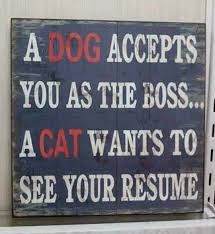
Who's the boss...
samedi 22 mars 2014
Horizon: Is seeing believing?
Horizon explores the strange and wonderful world of illusions - and reveals the tricks they play on our senses and why they fool us.
We show how easy it is to trick your sense of taste by changing the colours of food and drink, explain how what you see can change what you hear, and see just how unreliable our sense of colour can be.
But all this trickery has a serious purpose. It's helping scientists to create a new understanding of how our senses work - not as individual senses, but connected together.
It holds the intriguing possibility that one sense could be mapped into another. This is what happened to Daniel Kish, who lost his sight as a child. He is now able to create a vision of the world by clicking his tongue which allows him to echolocate like a bat.
And in a series of MRI scans, scientists are now looking to find out if Daniel's brain may have actually rewired itself enabling him to use sound to create a visual image of the world.
The full documentary is available here:
http://www.dailymotion.com/video/x18zpjf_horizon-2010-is-seeing-believing-hdtv_shortfilms
Warning: ads pops up during the documentary
We show how easy it is to trick your sense of taste by changing the colours of food and drink, explain how what you see can change what you hear, and see just how unreliable our sense of colour can be.
Neuroscientist Dr Beau Lotto and volunteer Kim Read.
The chair illusion known as the Beuchet Stuhl chair shows us how easily our sense of vision can be fooled.
But all this trickery has a serious purpose. It's helping scientists to create a new understanding of how our senses work - not as individual senses, but connected together.
It holds the intriguing possibility that one sense could be mapped into another. This is what happened to Daniel Kish, who lost his sight as a child. He is now able to create a vision of the world by clicking his tongue which allows him to echolocate like a bat.
And in a series of MRI scans, scientists are now looking to find out if Daniel's brain may have actually rewired itself enabling him to use sound to create a visual image of the world.
The full documentary is available here:
http://www.dailymotion.com/video/x18zpjf_horizon-2010-is-seeing-believing-hdtv_shortfilms
Warning: ads pops up during the documentary
vendredi 21 mars 2014
To cut to the chase
To cut to the chase
to focus on what is important; to abandon the preliminaries and deal with the major points.
- All right, let's stop the idle chatter and cut to the chase.- aller droit au but
- After a few introductory comments, we cut to the chase and began negotiating.
jeudi 20 mars 2014
To get in someone's hair
To get someone out of one's hair
to cause someone to stop annoying oneself.
- What do I have to do to get this guy out of my hair.
- Will you get out of my hair! You are a real pain!
lundi 17 mars 2014
Peeve
Peeve (informal, slang)
To cause to be annoyed or resentful, to irritate; vex; annoy, something that irritates; vexation
1. A vexation; a grievance.
2. A resentful mood:
- To be in a peeve about the delays.
- it was a pet peeve of his- bête noire
- Seeing signs spelt incorrectly is a pet peeve of mine.
samedi 15 mars 2014
jeudi 13 mars 2014
To go bananas
When someone goes bananas about/over something, he/she becomes very enthusiastic about it.
The expression is considered slang and is generally used in informal contexts.
Here are a few examples:
- The students went bananas when they heard that Mani was going to address them.
- We all went bananas when we saw Steffi Graf walk into the gym.
- The children went bananas when they saw all the icecream.
When used in this sense, "to go bananas," means the same thing as "to go nuts" and "to go crazy".
For example,
- The constant questions made him go bananas.
- Ana thought she would go bananas sitting all alone at home.
- Being in the company of her son was driving Mala bananas.
"Cool bananas" is an expression, which is frequently used in American English as an exclamation. It is often used to mean "wow". Here are a few examples.
- Satish got an A in the exam. Cool bananas!
- You've got a new bike? Cool bananas!
- Cool bananas man! That is really wonderful news.
dimanche 9 mars 2014
Necessity is the mother of invention
samedi 8 mars 2014
Lucky charm
Clover, trefoil: plant
Shamrock : Irish emblem
Clubs: cards
Shamrock : Irish emblem
Clubs: cards
- He needed the Queen of clubs for a royal flush.
vendredi 7 mars 2014
It's no use crying over spilt milk
It's no use crying over spilt milk or Don't cry over spilt milk.
Prov. Do not be upset about making a mistake, since you cannot change that now.
- I know you don't like your new haircut, but you can't change it now. It's no use crying over spilt milk.
- OK, so you broke the drill I lent you. Don't cry over spilt milk.
jeudi 6 mars 2014
Out of a clear blue sky
To come out of a clear blue sky or come out of the blue
suddenly; all of sudden; without warning.
- Then, out of a clear blue sky, he told me he was leaving
- My sister Mary appeared on my doorstep out of the blue, after years with no word from her
samedi 1 mars 2014
What a tangled web we weave!
Oh what a tangled web we weave, when first we practice to deceive” is a quotation by Sir Walter Scott
We also talk about a 'web of lies"
It means that when you tell lies or act in a dishonest way you create problems and complications which you cannot control.
When someone tries to deceive another person, by lying and making up stories, he or she will make a mess of the deception.
It means that when you tell lies or act in a dishonest way you create problems and complications which you cannot control.
When someone tries to deceive another person, by lying and making up stories, he or she will make a mess of the deception.
If you tell a lie, then you will have to make up more lies to support the first lie, and then even more lies to support the other lies, and in the end you have a mess.
mercredi 26 février 2014
Idioms around "tea"
British people like tea so much...
I wouldn't do it for all the tea in ChinaIn the same idea:
- there is no way you would ever do it
- You couldn't pay me to do it/that.
- I wouldn't touch that with a 10-foot pole. (or whatever length you want)
- I wouldn't do it for all the money in the world. (or any large quantity of something valuable) - pour tout l'or du monde
For further explanations on the BBC learning service:
http://downloads.bbc.co.uk/worldservice/learningenglish/the_teacher/tea.mp4
"BBC" - Horizon 2014 The Power of the Placebo
Placebo or dummy pills
n. pl. pla·ce·bos or pla·ce·boes
1. A substance containing no medication and prescribed or given to reinforce a patient's expectation to get well.
2. An inactive substance or preparation used as a control in an experiment or test to determine the effectiveness of a medicinal drug.
"BBC" - Horizon 2014 The Power of the Placebo
They are the miracle pills that shouldn't really work at all. Placebos come in all shapes and sizes, but they contain no active ingredient. Now they are being shown to help treat pain, depression and even alleviate some of the symptoms of Parkinson's disease. Horizon explores why they work, and how we could all benefit from the hidden power of the placebo.
The latest research started to show why the placebo do work and how you can make the most of them. In an experiment, cyclists were given two types of pills thinking that they would have an effect on their performances. In fact, both pills were filled with corn flour. Surprisingly enough, half of the riders were quicker with the corn flour. Why that’s happening, is still an open question.
On the other hand, Dr David Kallmes noticed that there were some reasons to suspect that there were numerous factors at play in the apparent effectiveness of the cement he was using to treat back pain. So he decided to put its established procedure to the test. He designed a trial in which some patients will be given the real procedure and some will be given a placebo. But in this case the placebo couldn’t be a dummy pill. It would have to be a fake operation. They really simulated the procedure for the patient. Within a week of the injection one patient with a broken vertebra was able to play golf again. There was no statistically significant difference in degree of pain relief between the patients who underwent vertebroplasty or placebo. A pretend procedure can be as effective as a vertebroplasty.
Around the world, scientists are investigating how a placebo works, what’s happening inside your body and brain. It has all to do with a neurotransmitter called PGE2. It’s a real neurobiological effect. By scanning the brain of people who have experienced a placebo effect, it has revealed clues about how a placebo effect works. The placebo effect is tapping into the pain control circuitry to release the natural pain killers in our brain like morphins. And this is not just pain killers that placebo can activate. Our brain is capable of producing complex chemicals that we need. Placeboes work by tapping into our chemical systems, our natural pharmacy that our body has evolved. In the case of Parkinson’s disease, the placebo effect can release dopamine just like the real drug. But how much are our expectations capable of. Placebo can alleviate conditions from depression, insomnia, nausea, to attention deficit disorder.
And because, it’s all about your expectations, even the size and shape of a pill can make the difference to how well it works: capsules are more effective than tablets, large capsules are better than smaller ones, expensive medications are more effective than cheap medications, colors make the difference, red capsule is more effective to treating pain, blue capsule is more effective to treating anxiety. There are clear limits to what placebo can do, it won’t treat cancer but in the area where it is effective, scientist are wondering how to make the most of them.
But do we really need to be duped for the placebo to work? A professor from Harvard put this hypothesis to the test and revealed that 62% of the patients report improvement from a pill they knew was inactive. Understanding this phenomena is the key to unlock our body potential to heal itself. The relationship between the doctor and the patient is also significant and has been reported to optimize the placebo effect.
It seems that kindness can make the difference!
jeudi 20 février 2014
Grieving the end of a relationship
- to be in mourning, to go through a period of mourning (for death loved one)
- to get closure, to achieve closure, to bring closure to one's grief (for a relationship)
Acceptance entails making peace with the loss, letting go of the relationship and slowly moving forward with your life.
Begin a new chapter.
You'll never be able to erase your memory of this person, but you can use the experience to better yourself and to help others. If you wronged someone, resolve never to make the same mistake again, and take it a step further: help others avoid making the same mistake you did. If you were a victim, reach out to other victims, and teach others how to avoid the wrongdoing that you faced. Make the end of your relationship with that person a turning point in your life. Start moving in a new direction.
dimanche 16 février 2014
Live in the present!
samedi 15 février 2014
Bumptious
/ˈbʌmpʃəs/
used of temperament lacking retraint or modesty - suffisant, prétentieux
- offfensively, overly assertive
- overly self-confident
vendredi 14 février 2014
To be a pain in the neck
If someone is very annoying and always disturbing you, he/she is a pain in the neck.
Syn: nuisance, pest, a drag
it's a drag! - ca me rase
what a drag! - bonjour la galère
Syn: nuisance, pest, a drag
- Filling out the forms for my recent insurance claim was a real pain in the neck.- casse-pieds
- This assignment is a pain in the neck. Your little brother is a pain in the neck.
it's a drag! - ca me rase
what a drag! - bonjour la galère
mercredi 12 février 2014
"Salon du chocolat"
Last weekend our capital was all about the Salon du Chocolat. After hitting major trendsetting cities like Paris, Cannes, London, Cairo, New York and Shanghai, the Salon du Chocolat is finally setting up shop in the city it should call home: Brussels.
What can you find at the Salon du Chocolat? Pretty much everything you could possibly imagine. There's loads of chocolate to nibble on (grignoter) and delight (tickle: réjouir) your taste buds (papilles gustatives), of course, and there are workshops with famous chefs and patissiers too, workshops for children, books about chocolate, a fashion show with naught but sugary creations on the catwalk, a work of art made especially for the Salon by Belgian chocolatier Godiva and lots more.
There are different types of cocoa bean which are used in chocolate production today. They are the noble Criollo, the common Forastero and a hybrid between the two, the Trinitario. Criollo and Trinitario are often referred to as fine or flavour cocoa beans, while Forastero is considered the ordinary or bulk bean for mass production (although there are exceptions to this rule -- see below). Over 90% percent of the world's cocoa is bulk production, mostly from the Forastero bean. The remainder is fine/flavour cocoa, from most of the Trinitario and all of the Criollo varieties.
TRADITIONALLY CHOCOLATE IS NOT thought of as healthy -- after all it is mostly (cocoa) fat and sugar. In recent years however this idea has been challenged by numerous studies examining the health effects of chocolate. As chocolate is a complex substance, its constituents can affect the body in many different ways:
Flavonoids such as epicatechin have been shown to reduce the risk of heart disease, since they act as anti-oxidants and thus reduce cholesterol levels.
Theobromine is the defining chemical component of cocoa, which gives it its bitterness. It is a stimulant, but not as strong as caffeine.
Tryptophan is an amino acid from which the body makes serotonin, a messenger in the brain. High levels of serotonin are usually associated with an elevated mood.
Phenylethylamine is an amphetamine, and is responsible for chocolate's reputation as an aphrodisiac.
Anandamide is a cannabinoid -- it targets the same regions of the brain as cannabis. The quantities involved however, are once again very small, so that one is much more likely to be sick than high after consuming enough chocolate for anandamide to have an effect!
If chocolate is consumed in moderation -- perhaps 10 or 20g a day -- the beneficial compounds such as flavonoids outweigh the negative effects of the sugar and fat. This holds particularly for dark chocolate.
Today Belgium produces 172,000 tons of chocolate per year, almost 70,500 tons of which are consumed within the country.
samedi 8 février 2014
The world is your oyster!
One rules the world, one is in charge of everything.
- I feel like the world is my oyster today. - le monde m'appartient
- The world is my oyster! I'm in love!
if the world is your oyster, you have the ability and the freedom to do anything or go anywhere
- You're young and healthy and you've got no commitments, so the world is your oyster.
mardi 4 février 2014
Agony column
a column in a newspaper or magazine offering advice on personal problems to readers who write in.
In the same idea:
gutter press = presse à scandale
classified advertisements = petites annonces
comic(s) = magazines illustrés
glossy = magazine au papier de luxe
newsagent = marchand de journaux
More information:
- Classified advertisements' is also known as 'The classifieds" or "Small ads".
- The larger (employment) ads are known as Display Advertisements.
- Comics are very specifically aimed at children and are usually published weekly on newsprint (newspaper type) paper. They are essentially cartoons (bandes dessinées)
- The person who gives advice, in a newspaper or magazine, to correspondents with relationship problems is called an Agony Aunt.
Inscription à :
Articles (Atom)


.jpg)